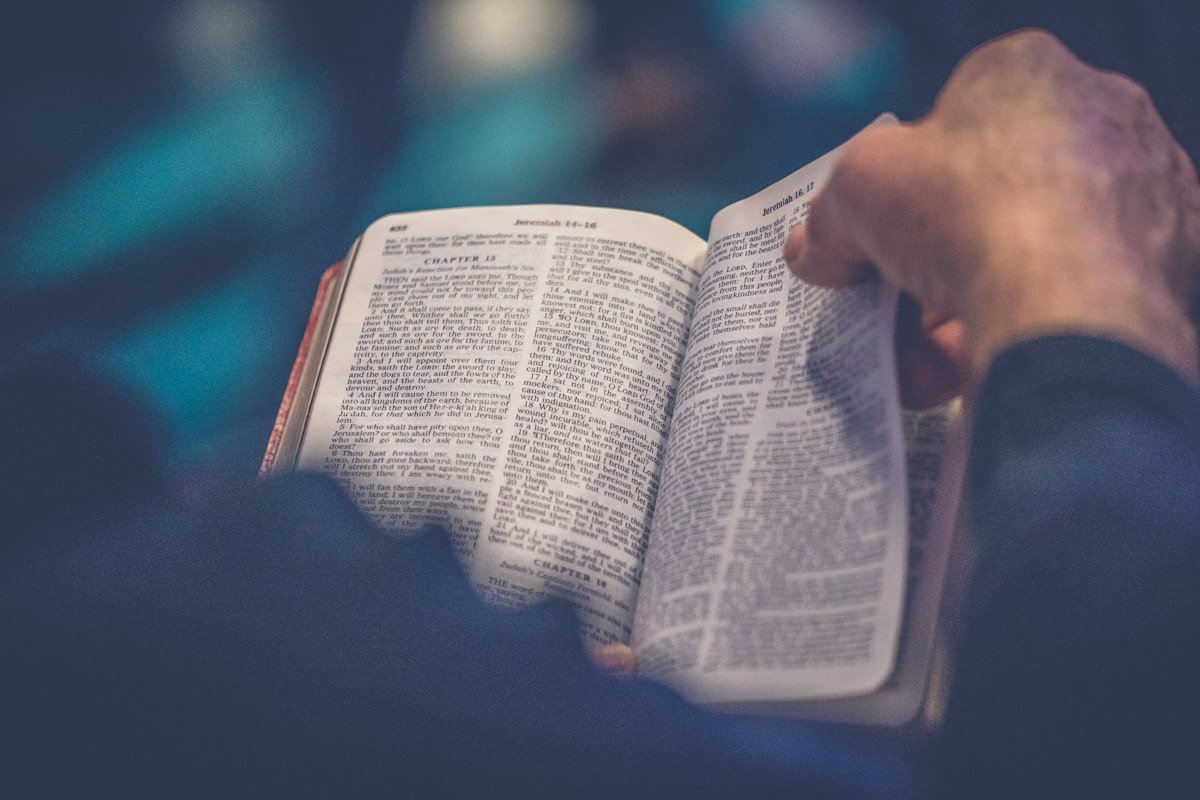
A pastor I know recently pasted a prayer request into ChatGPT. A member's mother had passed, and he wanted help drafting a follow-up email to the family. He got a decent draft back in ten seconds. Read it. Then deleted the whole thing and typed the email himself.
That pause is where the American church sits right now. The tool is open. The cursor is blinking. And most church leaders are still deciding what belongs on screen and what belongs in their own hands.
I think 2026 is the year that decision stops being theoretical. Not because the technology got dramatically better (it didn't, really). Because the math around churches finally caught up to the moment.
The Numbers Stopped Being Ignorable
According to the Pushpay/Barna 2026 State of Church Technology report, 45% of church leaders now use AI in some capacity. That's an 80% jump from the year before. The Exponential 2025 survey puts support even higher: 91% of church leaders say they support AI use in ministry, and 63.6% report using generative AI tools regularly. (We covered the full landscape of church technology trends for 2026 if you want the broader picture.)
Those numbers alone would make 2026 notable. But they don't tell the whole story.
Here's what does: Barna's research on pastor wellbeing shows that 38% of pastors have seriously considered leaving full-time ministry. Pastor loneliness has climbed from 42% in 2015 to 65% in 2023. Only 11% report excellent mental and emotional health.
Churches are not adopting AI because it's trendy. They're adopting it because they're running out of people. The staffing crisis didn't start with AI, but it made AI relevant faster than any theological conversation alone would have. When your executive pastor is also your volunteer coordinator, communications director, and database manager, the appeal of a tool that can draft a volunteer reminder email in fifteen seconds is not abstract. It's Tuesday afternoon.
The Policy Void Is the Real Story
Here's where my opinion gets pointed: the biggest risk with AI in churches is not the technology. It's the absence of any shared agreement about how to use it.
The Pushpay/Barna data is stark. Only 5% of churches have an AI use policy. Five percent. Meanwhile, 64% of church leaders say having one is important. The Exponential survey found that 73% of churches have no AI guidelines at all.
Some churches are being thoughtful about this. Rev. Louis Attles at La Mott A.M.E. Church in Pennsylvania built a chatbot called "Faith" to help with sermon research. The Catholic theological project Magisterium AI is now used by church leaders across 185 countries. These are deliberate, considered implementations with clear boundaries.
But most churches? AI adoption is happening one staff member at a time. Your worship leader is using it for social media captions. Your office admin is using it to reformat the bulletin. Your youth pastor is generating small group discussion questions. None of them asked permission, because there's no policy to ask about.
This governance gap is wider than anything the church has experienced with previous technology. When churches adopted websites, or online giving, or livestreaming, the tools were visible. Leadership could see them, evaluate them, set expectations. AI is different. It's invisible, personal, and already inside your operations whether you planned for it or not.
The Line That Cannot Move
Pew Research found that 73% of Americans believe AI should play no role in advising people about matters of faith. I think that instinct is fundamentally correct.
Carey Nieuwhof, who launched his own church AI initiative this year, has been candid about the tension. He calls AI a "fantastic research assistant" but a "dangerous preacher." Thom Rainer put it more bluntly: "We should refuse to confuse tools with calling."
The churches getting this right are drawing a clear line. On one side: the logistics that drain your week. Scheduling. First-draft communications. Data entry. Follow-up reminders. Attendance pattern analysis. These are tasks where smart tools (whether from platforms like Flowbudd, Planning Center, or others building in this space) can reclaim genuine hours.
On the other side of that line: the moments that define your ministry. The hospital visit at 2 a.m. The conversation with a couple whose marriage is falling apart. The sermon that comes from your own wrestling with the text on a Thursday night when the words won't come. No tool belongs there. Not because AI couldn't generate something plausible, but because the struggle itself is part of the calling.
The churches that will thrive with AI are the ones that can articulate where that line is and hold it. The ones that will struggle are the ones that never draw it.
What This Year Asks of Church Leaders
If you're a church leader reading this and feeling behind, you're not. You're in the majority. But 2026 is the year to stop observing and start deciding. Three things worth doing before the end of this year:
Write a one-page AI use policy. It doesn't need to be perfect. Cover three things: which tools are approved for church work, what member data should never be entered into a general AI tool, and which tasks stay human. You'll be ahead of 95% of congregations.
Pick one administrative pain point and test one tool for 90 days. Not five tools. Not a full digital transformation. One pain point. Volunteer scheduling. Visitor follow-up emails. Weekly communications. Give it a real trial with a real timeline.
Talk about it. Openly. In a staff meeting. Most churches are adopting AI in silence, one person at a time. That's how you end up with inconsistent quality, data privacy issues, and a congregation that feels something shifted but can't name what. Name it. Set the tone. Lead the conversation instead of discovering it happened without you.
None of these require a budget increase. All of them require a decision.
That pastor who deleted the AI-drafted email? He told me something interesting. He said the email he wrote by hand wasn't better than the AI version. It might have been worse. But it was his. The family would know his voice, his cadence, the way he always writes too long and circles back to the same verse.
That instinct to show up personally is the thing worth protecting. But the other 40 hours of his week, the hours spent on spreadsheets and scheduling gaps and forgotten follow-ups? Those don't need his voice. They need his time back.
2026 is the year churches figure out how to hold both.
Written by the Flowbudd Team. Flowbudd is the all-in-one church management platform that brings your people, giving, communications, volunteers, and operations into one place. Want to go deeper? Read our complete guide to AI for churches or see how Flowbudd works.